

BUILD
In-house Development
Alopex DB v0.8.16 Tutorial, Part 5: Opening the Database with a Server
Open an embedded data directory with alopex-server, run the same SQL over HTTP, and read the server-written row through the file API.
Services
Delivery models and flagship work
Alopex Family
Asopitech Labo
NiminoDesktop
A lightweight WebView desktop foundation in Nim
NimculusEditor
A GPU-native editor in Nim and Metal
PoieraPlatform
A control plane concept for AI agents, carrying compact contracts through authorization, deployment, and verification
TheatoraBackend
A composable backend construction kit concept for swapping providers, runtimes, and topology
RhyzoraFramework
A concept for building CLI, TUI, Web, desktop, and MCP interfaces from declarative contracts
Labo overview
What the R&D lab is working on
Enterprise plans
Open an embedded data directory with alopex-server, run the same SQL over HTTP, and read the server-written row through the file API.

Store embedding vectors with articles, combine similarity search with SQL filters, and reshape the results with DataFrames in Python and Rust.

Use CASE expressions, UNION and other set operations, common table expressions, rankings, and running totals in Alopex DB.

Create a table and query it with SELECT, JOIN, aggregation, and subqueries, then combine SQL and key-value data in one transaction.

Install Alopex DB v0.8.16 and learn its key-value API, transactions, deletion, and persistent storage in Python and Rust.

Which layer is your logging actually slow in? How to pick a Rust logger from your use case and runtime, and how to measure it.
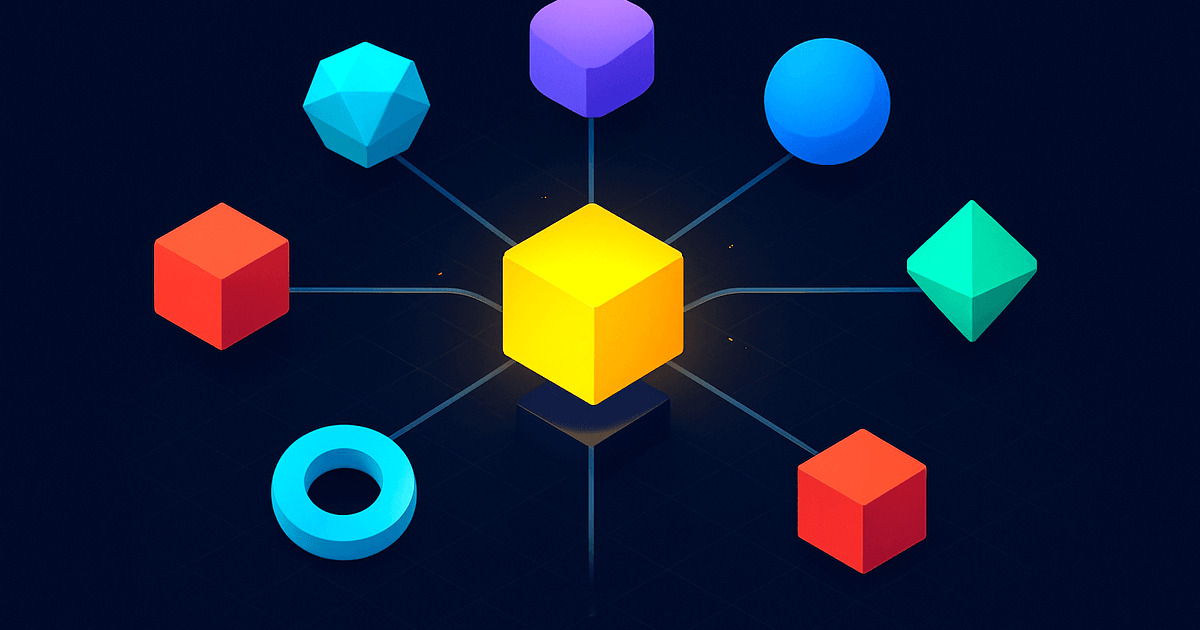
Comparing WASM-first languages (MoonBit, AssemblyScript, Grain) with languages that added a WASM backend (Rust, C/C++, TinyGo, Kotlin/Wasm, Dart, C#, SwiftWasm). Using linear memory vs. Wasm GC, Component Model support, binary size, and maturity as axes, this article explains how to choose a WASM language in 2026.
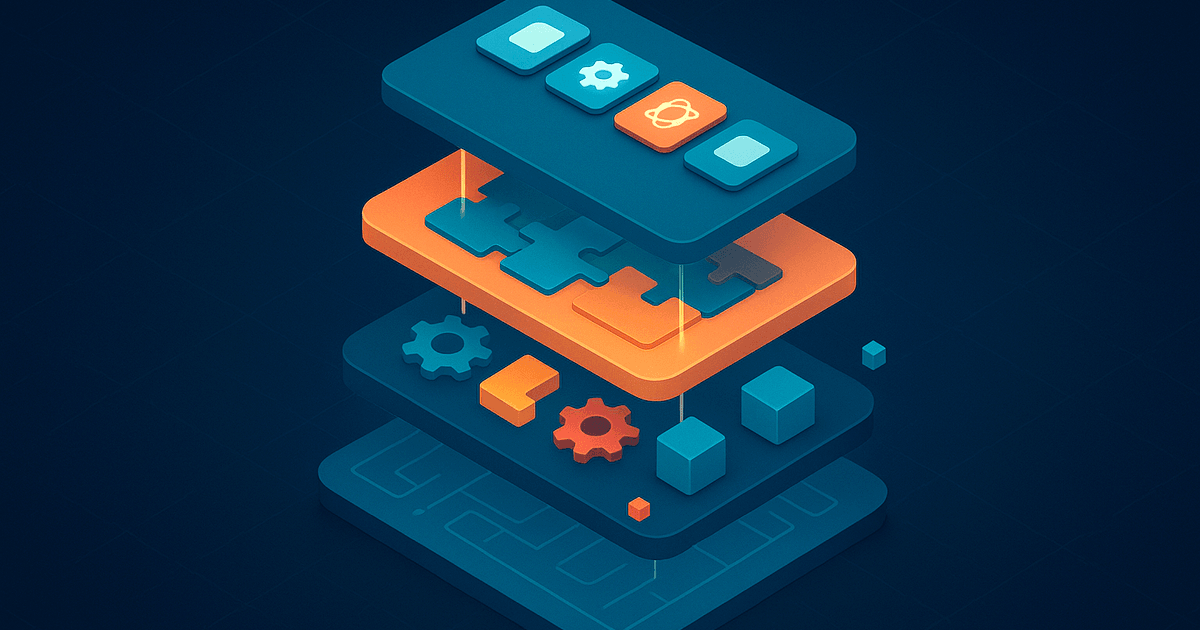
From WASM runtimes like Wasmtime, Wasmer, WasmEdge, wazero, and WAMR, through WASI/Component Model tooling (WIT, wit-bindgen, cargo-component, jco), upper frameworks (Extism, Spin, wasmCloud, Proxy-Wasm), to GPU implementations (Dawn, wgpu) — a layer-by-layer map of who implements WASM's raw APIs, and how to choose, as of 2026.

Building a distributed system means building node discovery, liveness detection, messaging, and agreement before getting to the actual work. Alopex Chirps takes on exactly those four. This covers what it handles and what it does not, why QUIC was chosen, and how openraft came to be the consensus layer.
The world in which nodes send signed, contradictory information. The meaning of the constant n=3f+1, PBFT's three-phase voting, Tendermint's locking rules, HotStuff's quorum certificates, and what the DAG-BFT designs since Narwhal separated and what they removed. Part 3 of a 4-part series.

A quick introduction to Nim, and an announcement of two desktop products I started in Nim — Nimino, a Tauri-like lightweight WebView app framework, and Nimculus, a Zed-like GPU-native code editor.

The myth that 'Rust can do anything' collapses the moment you try to scale a recursive AST. For SQL parsers — massive tagged unions, deep recursion — Rust's type system breaks down in both compile time and maintainability. A 3-language benchmark porting the same parser to Nim and Roc shows exactly why Rust is structurally the wrong tool, with runnable code.

A technical look at Roc — Richard Feldman's pure functional language. Covering the alpha4-rolling status, Perceus reference counting, the Platform/Host model, and the Zig compiler rewrite, informed by AlopexDB's SQL parser trial.
A technical overview of Nim in 2026 — the stable 2.2 series, the upcoming 3.0 (Nimony) compiler rewrite, ORC memory management, C ABI interop, and its real-world performance as an SQL parser candidate for AlopexDB.
Open an embedded data directory with alopex-server, run the same SQL over HTTP, and read the server-written row through the file API.
Store embedding vectors with articles, combine similarity search with SQL filters, and reshape the results with DataFrames in Python and Rust.
Use CASE expressions, UNION and other set operations, common table expressions, rankings, and running totals in Alopex DB.
Create a table and query it with SELECT, JOIN, aggregation, and subqueries, then combine SQL and key-value data in one transaction.
Install Alopex DB v0.8.16 and learn its key-value API, transactions, deletion, and persistent storage in Python and Rust.
Which layer is your logging actually slow in? How to pick a Rust logger from your use case and runtime, and how to measure it.
Comparing WASM-first languages (MoonBit, AssemblyScript, Grain) with languages that added a WASM backend (Rust, C/C++, TinyGo, Kotlin/Wasm, Dart, C#, SwiftWasm). Using linear memory vs. Wasm GC, Component Model support, binary size, and maturity as axes, this article explains how to choose a WASM language in 2026.
From WASM runtimes like Wasmtime, Wasmer, WasmEdge, wazero, and WAMR, through WASI/Component Model tooling (WIT, wit-bindgen, cargo-component, jco), upper frameworks (Extism, Spin, wasmCloud, Proxy-Wasm), to GPU implementations (Dawn, wgpu) — a layer-by-layer map of who implements WASM's raw APIs, and how to choose, as of 2026.
Building a distributed system means building node discovery, liveness detection, messaging, and agreement before getting to the actual work. Alopex Chirps takes on exactly those four. This covers what it handles and what it does not, why QUIC was chosen, and how openraft came to be the consensus layer.
The world in which nodes send signed, contradictory information. The meaning of the constant n=3f+1, PBFT's three-phase voting, Tendermint's locking rules, HotStuff's quorum certificates, and what the DAG-BFT designs since Narwhal separated and what they removed. Part 3 of a 4-part series.
A quick introduction to Nim, and an announcement of two desktop products I started in Nim — Nimino, a Tauri-like lightweight WebView app framework, and Nimculus, a Zed-like GPU-native code editor.
The myth that 'Rust can do anything' collapses the moment you try to scale a recursive AST. For SQL parsers — massive tagged unions, deep recursion — Rust's type system breaks down in both compile time and maintainability. A 3-language benchmark porting the same parser to Nim and Roc shows exactly why Rust is structurally the wrong tool, with runnable code.
A technical look at Roc — Richard Feldman's pure functional language. Covering the alpha4-rolling status, Perceus reference counting, the Platform/Host model, and the Zig compiler rewrite, informed by AlopexDB's SQL parser trial.
A technical overview of Nim in 2026 — the stable 2.2 series, the upcoming 3.0 (Nimony) compiler rewrite, ORC memory management, C ABI interop, and its real-world performance as an SQL parser candidate for AlopexDB.